

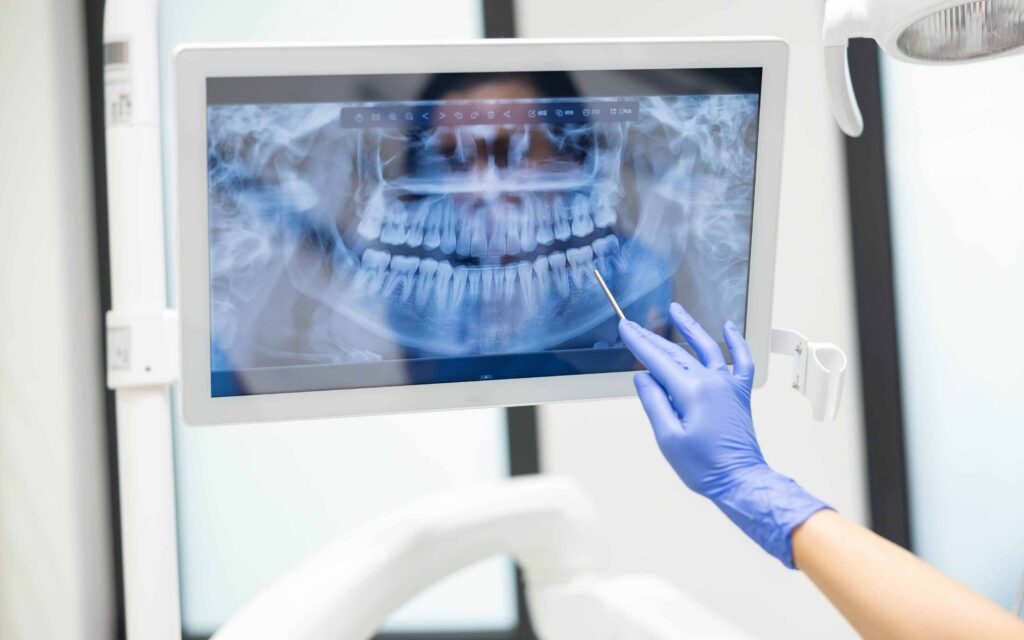
Dental inlays and onlays are custom-made restorations for back teeth. They’re used when damage or decay is too large for a regular filling but not severe enough to need a full crown. An inlay fits inside the raised points of the tooth, called cusps. An onlay extends over one or more cusps for added support.
At Smith Dentalworks in Oro Valley, Dr. Atty Smith offers ceramic inlays and onlays as part of our tooth-colored restorations. Each one is custom made for a precise fit and a natural look. Before any treatment starts, Dr. Smith explains why this option makes sense for your tooth.
What Are Dental Inlays and Onlays?
Inlays and onlays are known as indirect restorations. A traditional filling is shaped directly inside the tooth during your visit. An inlay or onlay is different, because it’s made to fit the prepared tooth first and then bonded into place.
Because each restoration is custom made, it can restore a larger area of a tooth with a precise fit. In the right situation, it also preserves more of the healthy tooth than a crown would.
Inlay vs. Onlay: What’s the Difference?
The difference comes down to how much of the tooth the restoration covers.
An inlay sits within the prepared area of the tooth and doesn’t extend over the cusps. It works well when the damage is contained in the center of the tooth and the cusps around it are still strong.
An onlay restores the damaged area and also covers one or more cusps. Dentists often use one when a cusp is weakened or broken and the tooth needs more support, but a full crown would cover more than necessary.
When Do You Need an Inlay or Onlay?
Your dentist may recommend an inlay or onlay when a tooth needs more support than a filling can give but doesn’t need full coverage. Common situations include:
- Moderate decay in a back tooth
- A large existing filling that’s worn or failing
- A weakened or damaged section of a molar or premolar
- A cracked or broken cusp that needs coverage
An exam is the only way to know which restoration fits. The decision depends on how much healthy tooth remains and how much chewing force that tooth handles, not just on the size of the cavity.
Are Inlays and Onlays Better Than Fillings?
Not automatically. Fillings and inlays or onlays are meant for different levels of damage.
A filling is placed directly and works well for smaller areas of decay. An inlay or onlay is a better fit when the damaged area is larger and the tooth benefits from a stronger, custom-shaped restoration. Dr. Smith will recommend whichever option gives the tooth the support it needs.
Are Inlays and Onlays Better Than Crowns?
They can be the more conservative choice when a tooth doesn’t need full coverage. Because an onlay covers only part of the tooth, more of your natural tooth structure can stay in place.
When a tooth is badly cracked, heavily restored or weakened throughout, a crown is often the better way to protect the whole tooth.
How to Tell Which Restoration Fits
| Restoration | Typically used when |
| Filling | Decay or damage is small enough to repair directly |
| Inlay | Damage is larger but stays within the cusps |
| Onlay | One or more cusps need coverage and support |
| Crown | The tooth is extensively damaged or weakened |
What Materials Are Used for Inlays and Onlays?
Inlays and onlays can be made from ceramic, resin-based composite or metal alloys. According to the American Dental Association, the right material depends on the strength the tooth needs, its location and how important appearance is.
At Smith Dentalworks, inlays and onlays are made from tooth-colored ceramic. The material is shaded to blend in with your natural teeth, so the restoration is hard to spot when you smile.
How Are Inlays and Onlays Placed?
First, Dr. Smith removes any decay or damaged tooth structure and prepares the tooth. An impression or digital scan of the tooth is then used to create the custom restoration.
Once the inlay or onlay is ready, Dr. Smith checks the fit, bite and appearance before bonding it securely to the tooth. You can learn more about the tools we use on our technology page.
How Long Do Inlays and Onlays Last?
Inlays and onlays can last many years with good care, but no restoration lasts forever. Lifespan depends on the material, the condition of the tooth and how much force it takes from chewing or grinding.
Regular exams let your dentist check the restoration and the tooth underneath it for wear or new decay, so small problems can be handled early.
Questions to Ask Your Dentist About Inlays and Onlays
If an inlay or onlay is recommended for you, these questions can help you understand the plan:
- How much of my tooth is damaged?
- Would a filling give this tooth enough support?
- Why an onlay instead of a crown, or the other way around?
- How should I care for the restoration afterward?
Frequently Asked Questions About Dental Inlays and Onlays
Do inlays and onlays look natural?
Ceramic inlays and onlays are shaded to match your surrounding teeth, so they blend in well. That’s one reason many patients prefer them over older metal restorations.
Can an onlay replace an old silver filling?
Often, yes. When a large metal filling is worn or has weakened the tooth around it, an inlay or onlay can be a stronger, tooth-colored replacement. Your dentist will check whether the tooth is a good candidate.
Is an onlay the same as a partial crown?
Onlays are sometimes called partial crowns, because they cover part of the chewing surface rather than the whole tooth.
How do I care for an inlay or onlay?
Care for it the same way you care for your natural teeth. Brush twice a day, clean between your teeth and keep your regular checkups so your dentist can monitor the restoration.
Ask Dr. Smith About Inlays and Onlays in Oro Valley
If you have a large or worn filling, or a tooth that’s cracked or weakened, an inlay or onlay may restore it while keeping more of your natural tooth. Dr. Smith will walk you through what she sees and the options that fit your tooth.
Call Smith Dentalworks at (520) 505-4422 or request an appointment online. Our Oro Valley office is open Tuesday through Friday and welcomes patients from Oro Valley, Tucson and nearby communities. New to the practice? Here’s what to expect at your first visit.