

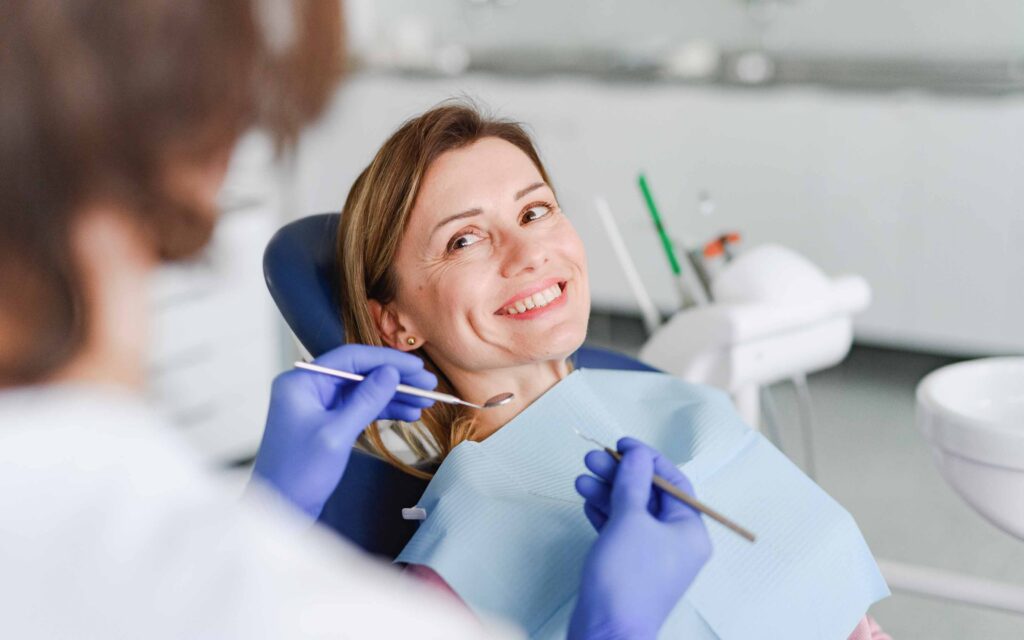
Dental sealants are thin protective coatings a dentist places on the chewing surfaces of back teeth. They keep food and bacteria out of the deep grooves where cavities often start. Sealants aren’t only for kids. Dental sealants for adults can make sense when molars have deep grooves or a person’s cavity risk is higher than average.
At Smith Dentalworks in Oro Valley, Dr. Atty Smith looks at the shape of your molars and your history with cavities before recommending a sealant. That way you understand why a tooth might benefit before anything is placed.
What Are Dental Sealants?
A dental sealant is a thin coating applied to the chewing surfaces of back teeth, mainly the molars. The material flows into the natural pits and grooves of the tooth and then hardens. Depending on the material, it sets chemically or with a curing light.
Once in place, the sealant forms a smooth barrier over areas that are hard to reach with a toothbrush.
How Do Dental Sealants Prevent Cavities?
Molars aren’t smooth. Their chewing surfaces have small grooves called pits and fissures, and plaque and food particles settle into them easily. Even careful brushers can miss these spots.
A sealant covers those grooves so bacteria can’t settle in as easily. The Centers for Disease Control and Prevention (CDC) reports that sealants prevent about 80% of cavities in back teeth over two years and continue protecting against about 50% of cavities for up to four years. The American Dental Association (ADA) also notes that sealants can help prevent or slow the progression of certain early cavities.
Sealants add protection on top of your daily routine. You still need to brush with fluoride toothpaste, clean between your teeth, and keep up with regular checkups.
Do Adults Need Dental Sealants?
Adults don’t automatically need sealants, but many could benefit from them. The decision depends on the condition of your teeth and your overall risk of decay.
The CDC points out that adults ages 20 to 34 have more untreated cavities in their back teeth than any other adult age group. That’s one reason young adults in particular may want to ask their dentist about sealants.
Signs You May Be a Good Candidate
Your dentist may recommend dental sealants if you have:
- Deep grooves or pits in your molars
- A history of cavities
- Back teeth that are hard to keep clean
- Early areas of decay that haven’t formed a cavity yet and that your dentist decides can be sealed
Are Dental Sealants Only for Children?
No, although children and teens are still a key group for sealants. Permanent molars come in early and can be vulnerable for years. The CDC reports that children ages 6 to 11 without sealants have almost three times as many cavities in their first molars as children with sealants.
For adults, the same logic applies to any molar with deep grooves or a higher cavity risk. Age alone doesn’t decide whether a sealant makes sense.
Dental Sealants vs. Fillings: What’s the Difference?
Sealants and fillings do different jobs. A sealant is preventive. It protects a healthy or very early-stage tooth surface before a cavity forms.
A filling is restorative. It’s used once decay has created a cavity, and the damaged part of the tooth needs to be removed and rebuilt. If you need that kind of repair, our tooth-colored restorations blend in with your natural teeth. Your dentist will decide whether a tooth can be sealed or needs restorative treatment instead.
How Are Dental Sealants Applied?
Getting a sealant is a quick, straightforward visit. Your dental team cleans and prepares the tooth so the sealant bonds well. The sealant material is then placed into the grooves and pits and hardened.
Placing a sealant normally doesn’t require removing any healthy tooth structure, and you can eat and chew normally once it has set.
How Long Do Dental Sealants Last?
Sealants can protect teeth for several years. How long they last depends on chewing forces, normal wear and the shape of the tooth.
There’s no set replacement date. Your dentist checks sealants at your regular exams and repairs or replaces them if they’ve worn down.
Are Dental Sealants Safe?
Sealants are a widely used preventive treatment. The ADA notes that resin-based dental materials, including sealants, can cause a very low and temporary BPA exposure right after placement, and current evidence doesn’t show this exposure is a health concern.
If you have questions about the specific material used, ask your dentist. Dr. Smith is happy to walk you through the options and your individual situation.
Can You Get a Sealant on a Tooth With a Filling?
It depends on the tooth. Sealants are meant for pits and grooves that would benefit from a protective barrier. A tooth that already has a filling may need a different approach, depending on why the filling was placed and whether other areas are still vulnerable. Your dentist can examine the tooth and recommend what fits.
Questions to Ask Your Dentist About Sealants
If you’re considering dental sealants as an adult, these questions are a good place to start:
- Do my molars have deep grooves that are hard to clean?
- Am I at higher risk for cavities?
- Is there any existing decay that needs treatment instead?
- How will my sealants be checked over time?
Frequently Asked Questions About Dental Sealants for Adults
Does getting a sealant involve drilling?
Normally, no. A sealant is applied over the tooth surface after cleaning, without removing healthy tooth structure.
Can a sealant go over early decay?
In some cases, yes. The ADA supports sealing certain early lesions that haven’t become cavities. Your dentist decides whether a tooth qualifies or needs a filling.
Which teeth get sealants?
Sealants go on the chewing surfaces of back teeth, mostly molars, because that’s where the deepest pits and grooves are.
Will my dentist check my sealants?
Yes. Sealants are checked at your regular exams, and your dentist can repair or replace one if it has worn.
Do sealants replace brushing and flossing?
No. Sealants protect the grooves of your molars, but they don’t cover every tooth surface. Daily brushing, cleaning between teeth and regular visits are still essential.
Talk With Dr. Smith About Sealants in Oro Valley
Sealants are one way to give vulnerable back teeth extra protection, and they fit into a broader preventive dentistry plan. At your next exam, Dr. Smith can look at your molars, explain what she sees and help you decide whether sealants make sense for you.
To schedule a visit, call Smith Dentalworks at (520) 505-4422 or request an appointment online. Our Oro Valley office is open Tuesday through Friday and welcomes patients from Oro Valley, Tucson and nearby communities. New patient? Here’s what to expect at your first visit.