

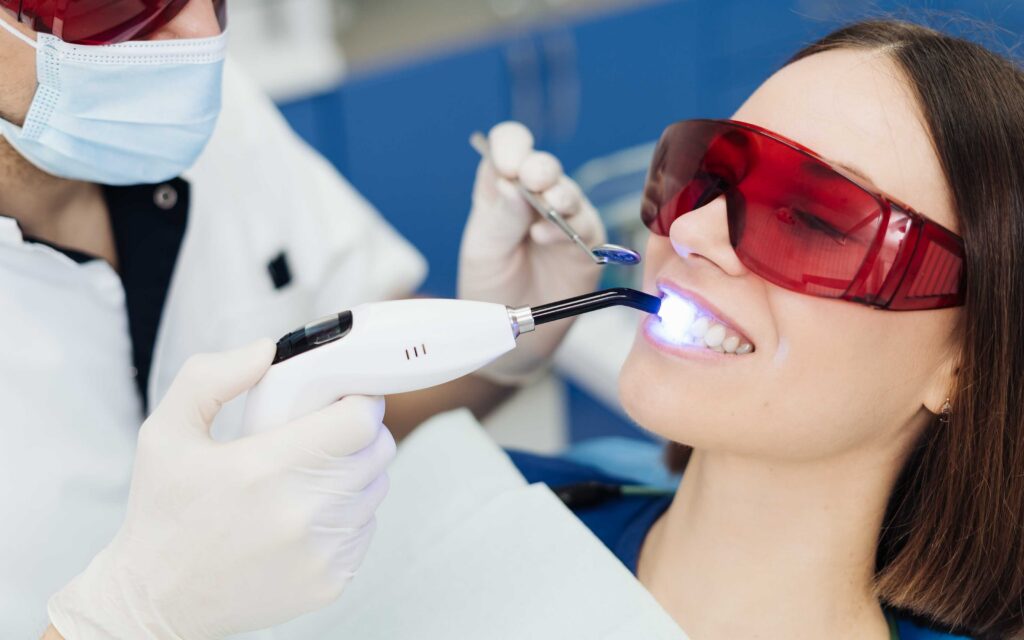
When patients hear about laser dentistry, one of the most common questions is simple: Is it actually better than traditional dental treatments? The answer depends on your needs, but in many cases, laser dentistry offers a more comfortable and efficient experience.
At Smith Dentalworks in Oro Valley, modern dental technology like laser dentistry is used to improve precision, reduce discomfort, and support faster healing. Understanding how it compares to traditional methods can help you make a confident, informed decision about your care.
What Is Laser Dentistry and How Does It Work?
Laser dentistry uses focused light energy to perform dental procedures on both hard and soft tissues. Instead of relying on drills or scalpels, dentists use highly controlled laser beams to remove or reshape tissue.
This approach allows for:
- Greater precision during treatment
- Less impact on the surrounding tissue
- Reduced need for anesthesia in some cases
Laser dentistry is commonly used for gum treatments, cavity preparation, and certain cosmetic procedures.
What Is Traditional Dentistry and When Is It Used?
Traditional dentistry relies on mechanical tools such as drills, scalpels, and hand instruments. These methods are still widely used and remain effective for many treatments.
You will typically see traditional techniques used for:
- Large cavity removal
- Tooth restorations like crowns and bridges
- Complex procedures that require physical shaping
While effective, these methods may involve more vibration, pressure, and longer recovery times compared to laser-based treatments.
How Does Laser Dentistry Compare to Traditional Dentistry?
Here is a clear side-by-side comparison to help you understand the key differences:
| Feature | Laser Dentistry | Traditional Dentistry |
|---|---|---|
| Comfort | Minimal discomfort, often no drill | May involve pressure, vibration |
| Healing Time | Faster healing | Longer recovery in some cases |
| Precision | Highly targeted | Less precise in soft tissue work |
| Bleeding | Reduced bleeding | More bleeding possible |
| Anesthesia | Sometimes not needed | Often required |
| Noise | Quiet | Drill noise can cause anxiety |
Laser dentistry often improves the overall patient experience, especially for those with dental anxiety.
What Does Clinical Evidence and Modern Dentistry Say About Laser Dentistry?
When comparing laser dentistry and traditional techniques, clinical evidence and real-world application both show that each method has distinct advantages. However, laser dentistry is increasingly recognized in modern practices for its ability to improve precision, reduce patient discomfort, and support faster healing in specific procedures.
| Category | Laser Dentistry Evidence-Based Insight | Traditional Dentistry Insight |
|---|---|---|
| Clinical Precision | Delivers highly controlled, targeted treatment with minimal impact on surrounding tissue | Effective for structural work but may affect adjacent areas |
| Patient Comfort | Commonly associated with reduced pain, less vibration, and lower need for anesthesia | Often involves pressure, noise, and higher discomfort levels |
| Healing and Recovery | Faster healing due to reduced tissue trauma and inflammation | Standard healing timelines depending on procedure complexity |
| Bacterial Reduction | Laser energy can significantly reduce bacteria in treated areas, supporting cleaner procedures | Relies on mechanical removal and adjunctive treatments |
| Bleeding and Swelling | Minimizes bleeding and swelling, especially in soft tissue procedures | More bleeding and post-procedure swelling may occur |
| Procedure Efficiency | In some cases, allows for fewer appointments and streamlined treatment | May require multiple visits for similar outcomes |
| Technology Standard | Rapidly growing in advanced, patient-centered dental practices | Long-established and essential for complex restorations |
Laser dentistry is supported by a growing body of clinical use, particularly in soft tissue treatments, periodontal therapy, and minimally invasive procedures. It aligns with a broader shift in dentistry toward precision-based, patient-first care.
That said, traditional dentistry remains essential for many restorative and structural treatments. The most effective approach is not choosing one over the other, but using the right method for the right situation. Modern dental practices often integrate both technologies to deliver the safest, most effective outcomes.
Why Do Many Patients Prefer Laser Dentistry?
Laser dentistry continues to grow in popularity because it addresses common concerns patients have about dental visits.
Reduced discomfort
Laser treatments are less invasive, which can significantly lower pain during and after procedures.
Faster recovery
Because lasers minimize trauma to surrounding tissue, healing tends to be quicker.
Less anxiety
The absence of loud drilling sounds creates a calmer, more comfortable environment.
Improved precision
Dentists can target specific areas without affecting nearby healthy tissue.
When Is Traditional Dentistry Still the Better Option?
Laser dentistry is not always the right solution for every case. Traditional methods may be preferred when:
- Treating large or deep cavities
- Placing crowns or bridges
- Performing procedures that require heavy structural work
An experienced dental team will recommend the most effective approach based on your specific condition.
Is Laser Dentistry Safe and Effective?
Yes, laser dentistry is both safe and highly effective when performed by trained professionals. It has been approved for a variety of dental procedures and is widely used in modern practices.
At Smith Dentalworks, advanced technology is carefully integrated into treatment plans to ensure both safety and optimal results.
How Do You Know Which Option Is Right for You?
The best choice depends on your dental needs, comfort level, and treatment goals. Laser dentistry may be ideal if you are looking for a minimally invasive option with faster healing. Traditional dentistry may still be necessary for more complex procedures.
A personalized consultation is the best way to determine the right approach for your smile.
Why Modern Dental Technology Matters for Long-Term Oral Health
Advancements like laser dentistry are not just about comfort; they also improve long-term outcomes. More precise treatments can help preserve healthy tooth structure and reduce the risk of complications.
Choosing a dental practice that invests in modern technology ensures you receive care that is both efficient and forward-thinking. Contact us!
Who Is This Information Based On and Why It Matters
This article is informed by the clinical experience and training of licensed dental professionals at Smith Dentalworks in Oro Valley, AZ. The team provides comprehensive dental care, including preventive, cosmetic, restorative, and advanced procedures such as laser dentistry.
Dentists who use laser technology undergo additional training to safely and effectively perform these procedures. This includes understanding tissue interaction, laser settings, and patient-specific treatment planning. Incorporating advanced tools like dental lasers requires both technical expertise and ongoing education to ensure safe outcomes.
At Smith Dentalworks, treatment recommendations are based on:
- Clinical evaluation of each patient’s oral health
- Established dental guidelines and best practices
- Experience with both traditional and modern dental techniques
- A focus on patient comfort, safety, and long-term results
This combination of hands-on experience and modern technology allows the practice to determine when laser dentistry is appropriate and when traditional methods are the better choice.
Patients benefit from care that is not only based on current technology but also guided by professional judgment and proven dental principles.
Frequently Asked Questions
Is laser dentistry completely pain-free?
Most patients experience little to no pain during laser procedures. Some treatments may still require mild anesthesia depending on the case.
Can laser dentistry replace all traditional dental tools?
No, laser dentistry is a powerful tool, but it does not replace all traditional methods. Both approaches are often used together.
Is laser dentistry more expensive?
Costs can vary depending on the procedure. In many cases, the benefits, such as faster healing and fewer visits, can provide added value.
Does laser dentistry work for cavities?
Yes, lasers can be used to treat certain cavities, especially smaller ones. Larger cavities may still require traditional methods.
Is laser dentistry good for patients with dental anxiety?
Yes, it is often recommended for anxious patients because it reduces noise, discomfort, and overall stress.